
Lecture 1 – Sheep Breeds
1. INTRODUCTION
Sheep have existed in Africa for several thousands of years. The original indigenous, thin-tailed type are still to be found across Africa, from the North to as far South as the Zambezi River. In the desert regions of North Africa the thin-tailed sheep were largely replaced by indigenous fat tailed sheep about 3000 years ago. These were brought into the arid regions of Southern Africa by nomadic tribesmen of the North.
Wool sheep were only introduced into Africa from Europe in the 17th century AD by the European settlers in South Africa.
Sheep of all breeds and types now form an integral part of people’s lives and livelihoods throughout Africa.
2. BREEDS OF SHEEP
There are numerous breeds of sheep in Africa today. They range from breeds kept purely for mutton production, to those kept for wool production, to a cross between the two. Mutton breeds vary from the very hardy indigenous breeds, to exotic breeds from Europe, which are not hardy at all, and again there is a cross between the two. The wool breeds all originate from Europe. Some are hardy (e.g. Merino) and others are not.
3. INDIGENOUS MUTTON BREEDS
BLACKHEAD PERSIAN OR B.H.P.
| Figure 1: Blackhead Persian or B.H.P Source: centralmarketblog |
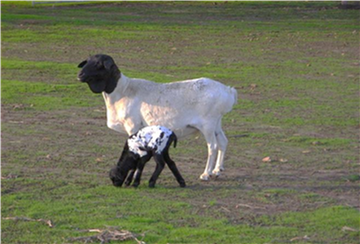
This is a very old breed which originated in the dry areas of the Middle East. The B.H.P. has a black head, neck and under tail, the rest of the coat is white. Fat is stored on the rump and around the tail and this type of sheep is called a fat-tailed sheep. The coat consists of hair, not wool, and the skin is very close-grained, which makes the breed very resistant to piercing types of grass seeds. The skin is used in the manufacture of leather gloves. The B.H.P. is resistant to local diseases, and does well in dry conditions and also in the veld. It produces a poor meat carcass, and, of course, no wool. One great advantage of the breed is that the ewes come on heat all the year round.
- Rams 68kg
- Ewes 52kg
Van Rooy: Slightly larger than the B.H.P., with a fat tail and all white colour. They do have some wool along the back, the remainder of the coat being hair.
4. CROSSBRED MUTTON BREEDS
DORPER
| Figure 2: Dorper Source: dorpermex |
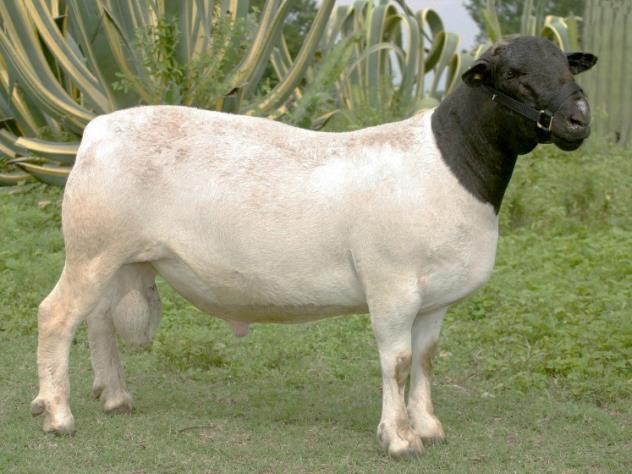
This breed was produced by crossing the Blackhead Persian ewes with rams from the exotic breed imported from the U.K., the Dorset Horn. This cross has now been ‘fixed’ to become a standard breed. Dorper ewes and rams will breed true. Dorpers have black hair on the head, and may have black spots on the body. The skin is covered with a mixture of hair and wool which is of no commercial value. Dorpers do not have fat tails, and they produce a good meat carcass with an even distribution of fat. The ewes are hardy and they are good milkers, although the breed is susceptible to blue tongue disease.
- Rams 80 – 90kg
- Ewes 50 – 65kg
WILTIPER
This breed was produced by crossing the Blackhead Persian ewes with Wiltshire Horn rams imported from the U.K. The breed is very similar to the Dorper, and is a good mutton sheep.
- Rams 80 – 90kg
- Ewes 50 – 65kg
5. EXOTIC BREEDS
DUAL PURPOSE BREEDS
These breeds produce both good mutton carcasses and also good quality wool. They are suitable for more intensive production than the indigenous breeds.
Figure 3: Mutton Merino
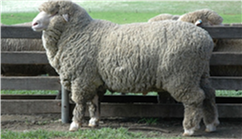
Source: northashrose MUTTON MERINO
This breed originated in Germany about 100 years ago, and has spread to many European and overseas countries. Ewes produce kilograms of good quality, white wool and meat carcasses are large, well-fleshed with very good mutton. The ewes are good mothers, being fertile and good milkers, and they have an extended breeding season.
- Rams 90 – 130kg
- Ewes 60 – 75kg
CORRIEDALE
| Figure 4: Corriedale
Source: spinningwheelspot |
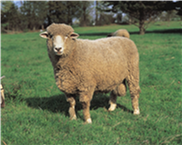
This dual-purpose breed started in Australia and New Zealand and is second in the world in importance to the Merino. These sheep produce both good mutton and long, strong, good quality wool, 100 – 150mm long. They are adapted to the climate in Australia, New Zealand and Southern Africa. Good flocks will average 6kg of wool per sheep. The ewes are good mothers, but they have a restricted breeding season and cannot be served by the ram at just any time during the year. The lambs grow and mature quickly, and both ewes and rams live longer than do other breeds.
- Rams 80 – 110kg
- Ewes 55 – 70kg
6. SPECIALISED BREEDS
| Figure 5: Suffolk
Source: upload.wikimedia |
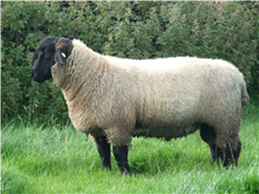
These breeds all originated in the U.K., and are kept for the production of rams which are used to cross with local indigenous breeds.
SUFFOLK
Black face and legs. A very good mutton sheep with short, good quality wool, producing 2 – 3kg per sheep. A limited breeding season, with the ewes coming on heat in the autumn and lambing in the spring.
- Rams 90 – 130kg
- Ewes 60 – 70kg
| Figure 6: Dorset Horn
Source: lifestyleblock |
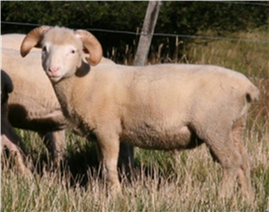
DORSET HORN
A medium-sized sheep with a white face and wool, both ewes and rams have horns. They are good mutton and wool producers and the ewes are very good, fertile mothers. Their chief characteristic is that they are about the only breed of sheep in the U.K. which will take the ram out of the normal breeding season, e.g. the autumn. Dorset Horn rams were crossed with Blackhead Persian ewes, to found the Dorper breed.
Figure 7: Wiltshire horn
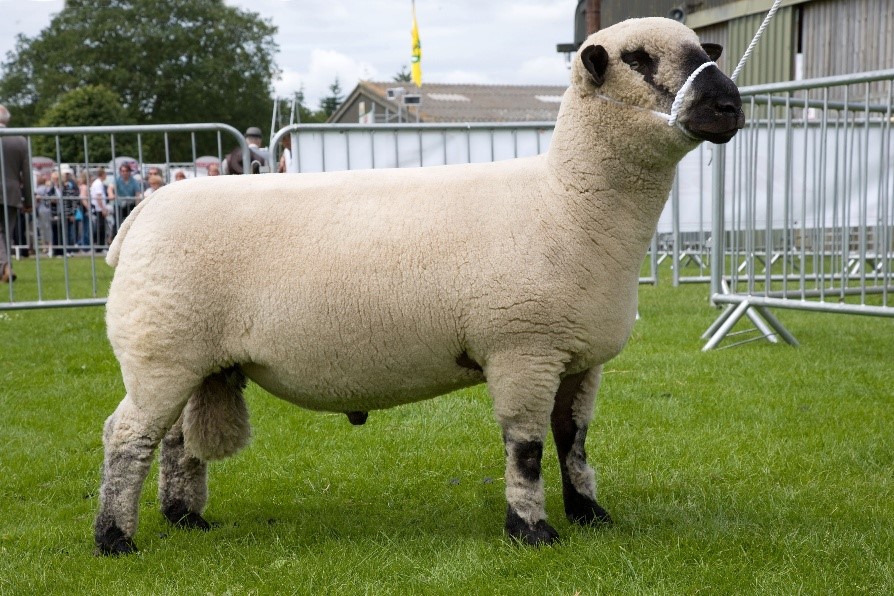
Source: chaileybrook WILTSHIRE HORN
This animal is very similar to the Dorset Horn and was used to cross with the Blackhead Persian to produce the Wiltiper Breed.
Hampshire Down: A good mutton sheep which will produce 2 – 5kg of good quality wool per sheep. The ewes are good milking mothers, but only accept the ram in the autumn to lamb down in the spring.
7. FACTORS AFFECTING THE CHOICE OF BREED
The breed of sheep which the farmer decides to keep on his farm will depend on the following factors:
- Climate: The indigenous sheep are suited to the hot, dry and arid conditions of the African continent. Some breeds, like the Dorper and Merino, also like dry conditions, but not as arid as the areas where the indigenous breeds thrive. European breeds will generally perform better under cooler, moister conditions.
- Vegetation: Sheep prefer to graze short grass and do not like the tall grass veld. Furthermore, the wool breeds pick up grass seeds in their wool, and these will bore through the skin of the sheep into the flesh, causing abscesses and infections.
Breeds like the Blackhead Persian and the Dorper do not suffer from this problem because their skin is covered with hair or very short wool.
- Internal Parasites: These are a serious problem with sheep, particularly during the rainy season. The indigenous breeds have more resistance to parasites than the exotic sheep, but dosing to control worms is a very important part of sheep management.
- Availability of Feed: Sheep are managed best when they are kept in well fenced paddocks and not penned at night. Fencing is an important aspect with both sheep and goats. The alternative is herding the flocks during the day and putting them into pens or kraals at night.
Major sheep and Goat Breeds in Southern Africa (From Livestock Production Systems, Maree & Casey, 1993).
| BREED | GENETIC COMPOSITION | SYSTEM | ENVIRONMENT |
| Sheep: Merino | Pure Merino | Extensive wool Production | Semi-harsh environment |
| SA Mutton Merino | German Mutton Merino | Semi intensive/extensive meat and wool production | Semi-harsh environment |
| Karakul | Pure Karakul | Extensive pelt production | Harsh, low rainfall environment |
| Afrino | 25% Blinkhaar-Afrikaner 25% Merino 50% SA Mutton Merino | Extensive meat and wool production | Harsh environment |
| Dohne Merino | Merino SA Mutton Merino | Extensive wool and meat production | Eastern Cape, Transvaal and Natal sourveld/semi-harsh |
| Dormer | Dorset Horn SA Mutton Merino | Semi-intensive meat and wool production | Winter and summer rainfall area/semi-harsh |
| Dorper | Dorset Horn Blackhead Persian | Extensive meat production | Harsh, low rainfall areas. |
| Ile de France | Rambouillet Dishley | Semi-intensive meat and wool production | Temperate climate. |
| Vandor | Van Rooy Dorset Horn SA Mutton Merino | Extensive meat and wool production | Harsh environment |
| Van Rooy | Blinkhaar-Afrikaner Rambouillet Blackhead Persian | Extensive meat production | Harsh environment |
| Goats: Angora | Pure Angora | Extensive or intensive mohair production | Eastern Karoo Semi-harsh |
| Boer Goat | Bred mainly from meat goats | Extensive meat production | Subtropical bushveld |
| True indigenous breeds | Several breeds of sheep and goats have been present in the region for 1000 -2000 years. They are hardy and well adapted to harsh environments and include Pedi sheep and goats and Damara and Namaqua Afrikaner sheep. |